


It feels absurd to proceed with this newsletter now that David Hockney passed away and the Knicks won the NBA Finals. With the amount of noise being generated on my algorithms surrounding these two seismic events, I don’t have much to add. I was, like many, startled and moved by the advertisement that Nike immediately released when the Knicks clinched it in five, winning the series for the first time since 1973. The spot was by Wieden + Kennedy, directed by Josh Safdie, and starring Chiki Uno, the downtown model who was memorably a muse of Shayne Oliver’s in the Hood By Air days. It made me nostalgic about being a New Yorker, something I consider myself to still be, due to time served.

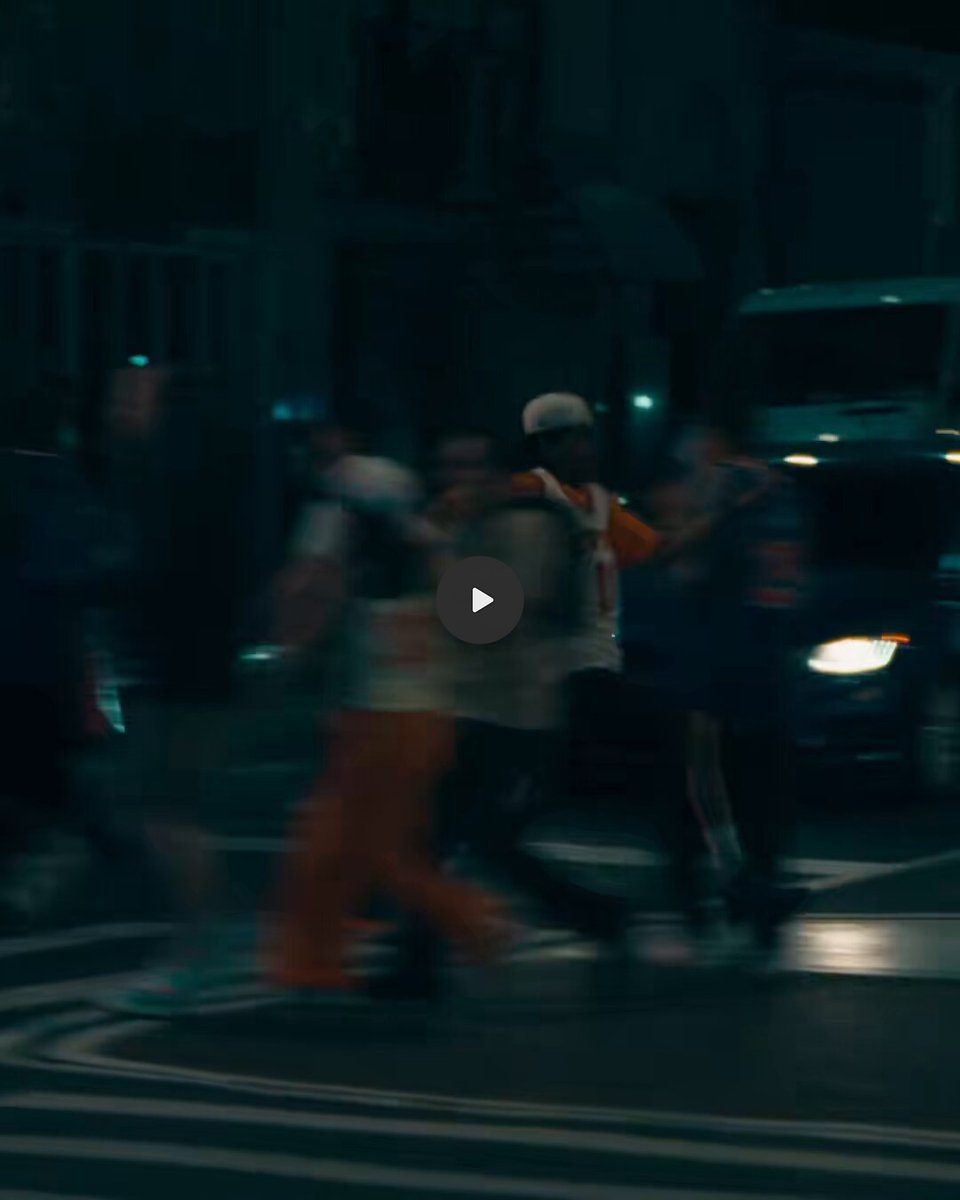
It also reminded me of a favorite editorial during my V Magazine days, shot in 2015(!) by Eloise Parry, styled by Akeem Smith, featuring Chiki.


Speaking of the algorithm, I’ve been thinking today about how profoundly I love and appreciate existing in sadistic gay culture. Whenever a hot guy pops up anywhere in the world, like Aphrodite from the surf, he rockets onto many a “For You” page, and the gays (writ large) report for immediate duty with a dossier of personal information. It happens so irrationally fast, it’s head-spinning. They reveal his identity, who he used to date, who he’s dating now, how many guys he’s fucked, how many guys he’s currently fucking, how open he and his partner are (or not), how big it is, which supplements he’s taking, even what he’s been arrested for and in what state and county and when. It’s a breed of cyber-gang-stalking I’ve earned the privilege of witnessing due to being a certain kind of gay guy online. When one pours over the disclosures being volleyed, one can’t help picking up on a certain tone of resentment and envy, masked with nonchalance, including attempts to discredit the subject outright—”he edits his photos"—which just makes the whole thing even more entertaining. It exposes the pathos of the obsessed as much as the background of the obsessed-over. And being obsessed and obsessed-over feels really in style right now. It’s a sickness and an open wound, a symbiotic relationship in which both sides are victimized and both sides win. Stop perceiving me / Don’t look away.
We all know that the attention economy rewards bad behavior—anything that gets people heated rises up the invisible charts. It’s nothing new, but it’s mutating slowly into an extreme parody of itself. I’m willing to speculate that maybe it’s only happening on my algorithm…but somehow, I doubt it. Lately, pop stars are waging proxy wars against each other with their respective fandoms, which only increases engagement with their music. Accusations of copying, who did what first, who’s authentic, who’s pretentious, who’s niche, who’s lying, and who stole what from whom have all emerged as a present-day lingua franca in all manner of creative spheres. Often, attacks are leveled behind “Close Friends” filters or on burner accounts—direct confrontation would, presumably, be too hot to handle. But the reflex to attack one’s “opps” now extends beyond pop music and into such far-flung corners as professional sports, fashion design, graphic design, algorithm coding, substacking, OnlyFans, and every other conceivable sphere of influence. Once I found myself immersed in X postings by a long-COVID activist in which she was expressing a battered, jealous rage over how much attention the Budibungyo Ebola outbreak was getting, I knew I had hurled myself headlong into the spiritual abyss. (Did I choose to extricate myself from it? Of course not.)
I’ve been sitting on an idea for a Costume Institute exhibit and Met Gala theme. It feels timely, and like it could take innumerable academic and analytical directions. Since I don’t know who to speak with about it, I’ll just drop it here. (Andrew Bolton, call me?) The exhibition would be called Copycat: The Art of Influence. The show would deconstruct the very concept of the reference, tracing garments back to their earliest, crudest origins, and demonstrating the myriad ways in which designers have iterated on iterations in order to arrive at novel, boundary-pushing fashion within a historical framework. Chinatown knockoffs, deliberate homage, unusual collaborations, trademark infringements, not to mention the core business model of new designers taking over storied houses and interpreting their codes—all would be grist for the delirious ripoff mill. Virgil Abloh’s “remixing” approach to Pyrex Vision, for example. Or Dapper Dan’s influential luxury pastiches. Think of all the Gaultier, Galliano, Comme Des Garçons, Vaquera, Moschino, and assorted Demna collections that embody this idea—clothes by designers with irony and humor finally being considered in a corrective, diagnostic context. It would explode conceptions of the idea itself—what is an idea, where does it come from, who owns it, and to what end? Finally we can put the delusion of idea-theft to rest, having acknowledged its primacy in the very concept of fashion itself.
For the carpet, the theme would be “knockoffs only.” Designers could dress their guests in reinterpretations of looks by other designers. Imagine the Prada guests all wearing Miuccia’s fantasy of Versace, or Anthony Vaccarello’s Saint Laurent doing a spin on Christian Lacroix. H&M or Zara, who never stay away from this promo opportunity, could tap Jeremy Scott and go completely insane. Let Alaïa collaborate with Hervé Léger! Something happened after the tragedy that was Diet Prada’s rise where everyone lost their ability to consider fashion from multiple angles or through a postmodern lens. The Internet’s outrage became too personal and nasty, and designers retreated into a mode of luxury over modernity. It feels like we’re still on a path back to sanity, and it’s perfect timing to poke holes in the all-too-sacred—and ludicrous—notion of “originality” in an industry that has sustained itself on trends in the first place.
I’m going somewhere with all of this.
I’ve noticed that the resort collections have been trickling out and garnering responses that are overblown. Something always happens during the pre-collection season in which brands more easily seize the spotlight than during the Paris or Milan shows. Part of this is because the presentations aren’t all clustered together, so brands get at least 24 hours of undivided attention where they often split it with several others. They also, often, take the form of extravagantly staged destination shows, stuffed with celebrities and V.I.P.s., which create more of a “moment.” This can result in an imbalance where more attention is paid to the pre-season collections than the more fashion-forward seasonal ready-to-wear (or couture), despite the fact that pre-seasons are designed to be more commercial and less of a fashion proposition. These collections are meant to be judged on a curve: how has the designer expanded upon what was proposed in the previous collection, before the next one pivots to something else? Instead, the Internet flattens them into the same category. On some level, the brands prefer the pre-collections soak up the lion’s share of the attention because those clothes make up the bulk of what’s in the stores. But from a fashion perspective, they’re just not as interesting. Unless they’re designed by Nicolas Ghesquière.
When the Louis Vuitton women’s Resort 2027 collection hit the runway at the Frick museum a few weeks ago, I was surprised by the outcry. The very same people who police originality are likewise repulsed when confronted with the real thing. Louis Vuitton is as blank a ready-to-wear canvas as you can dream up with a heritage brand—it’s fundamentally and historically a luggage purveyor. When Marc Jacobs became Vuitton’s creative director in 1997, he created its first ready-to-wear line ever, which debuted for Fall 1998. Austere and minimalist, it emphasized a blank slate. It would take until 2001 or so, with the first Sprouse collaboration, for its identity to begin to take flight. By the time Jacobs exited in 2013, he had put forth landmark collections like Spring 2003’s Murakami Minnie Mouse, Spring 2008’s Richard Prince nurses, Spring 2010’s afro-puffed Mark Ryden-esque nomads, Spring 2013’s escalators of twinning mega-mods, and his grand finale, Spring 2014’s midnight-black tribute to Miuccia Prada, Rei Kawakubo, Carlyne Cerf de Dudzeele, and a litany of other “showgirls” who inspired his work. Jacobs had effectively created the template for Louis Vuitton’s fashion line, exploded it, made it into pop culture, and lovingly torched it on his way out the door. But more crucially than those hit collections, each a spectacle in their own way, Jacobs established a wardrobe and an attitude that in many ways defined the aughts, from the metallic jewel toned crop tops to the Olsen-esque sunglasses and swingy, desecrated handbags. What was once associated with ‘90s grunge took on a post-electroclash layer of glitz.
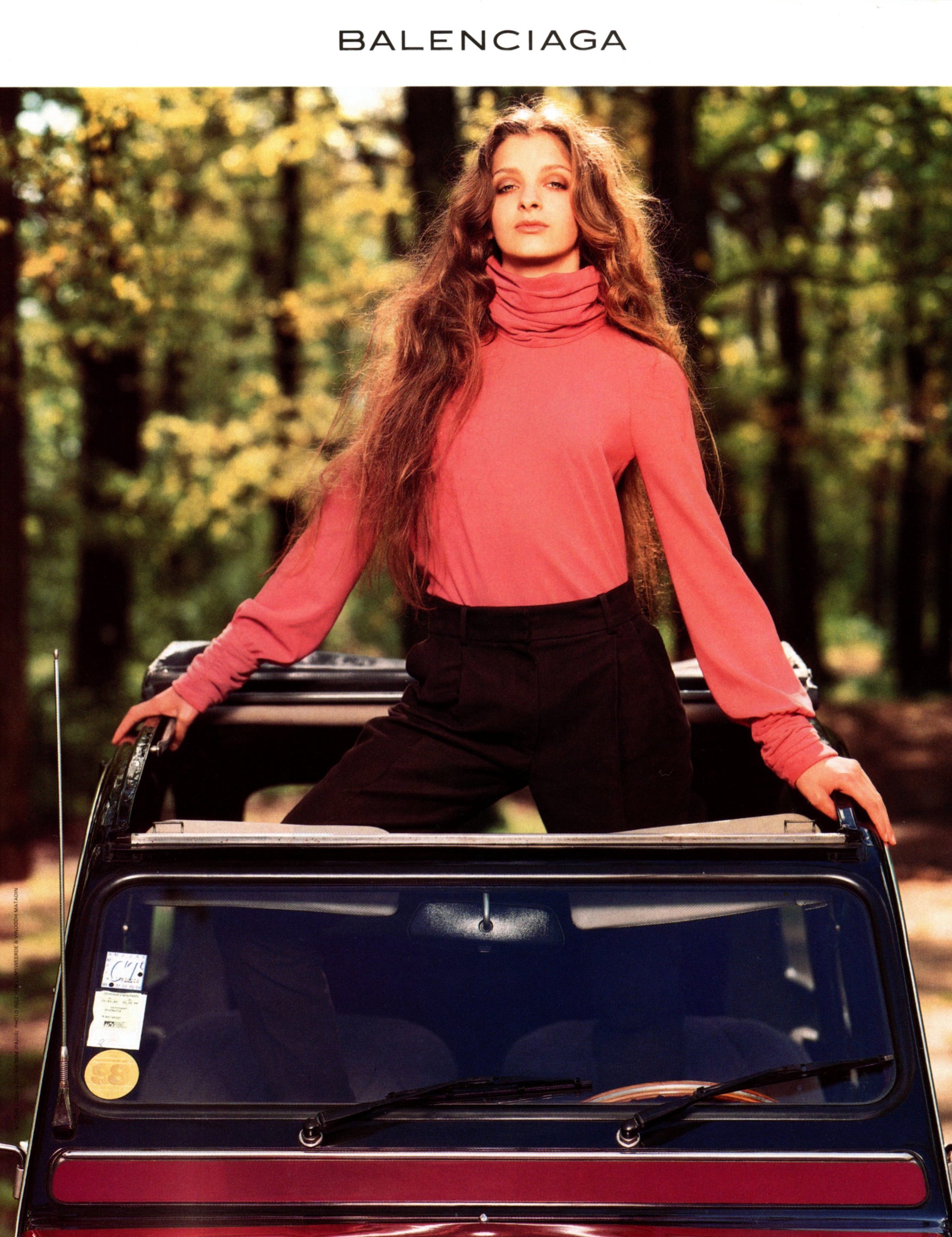
By the time Ghesquière stepped into frame, in 2013, he only had one predecessor to look to, and part of the reason he was hired was to skip past that reverential early-season backward glance that often comes with a new appointment. His 15-year tenure at Balenciaga was considered, by all accounts, nothing short of groundbreaking. In their statement announcing his hire, Vuitton stated that Ghesquière would bring “a modern creative vision to the House’s women’s collections, building on the values of refinement, savoir faire, and extreme quality.”
His debut at Vuitton delivered on that promise, with a slick treatise on ‘60s modernism by way of forward-looking hybridized leathers. From there he continued to establish something of a signature approach: he casts a hook line of nostalgia, only to pervert, mutate, and subvert it into something alien, expressive, and entirely new. He takes what’s familiar, evoking often outdated or naff ideas of glamour, and twists it into something hallucinatory, unfamiliar, and unflinchingly progressive. Where some designers focus on the body, creating clothes that beautify a woman, Ghesquière creates artifacts that draw attention to their own singularity. To his dissenters, this can be at odds with the wearer. To his faithful, it’s a fleeting opportunity to ride the lightning.
Personally, I look forward to a Ghesquière show more than I do almost any other designer, because the work is unfailingly novel and reveals itself in layers. What at first can be discordant or repulsive reveals something fascinating upon closer inspection, and continues to morph with each successive glimpse. His Resort 27 collection, inspired by a sort of absentee dissection of uptown/downtown street codes, is dizzyingly anticonventional. There are the leather ankle-boots sculpted to look like Foamposites, the belted socks, the asymmetric back-brimmed bucket hats, leather-trimmed denim ruffles that seem to explode from the groin like a cabbage patch, Edwardian-by-way-of-Amish ruffle-shouldered dress shirts, neoclassical Greek column handbags, Gaultier-inspired tromp l’oeil jeans (Jean-Paul Gaultier was Ghesquière’s first boss, and the job that first took him to New York), and a psychoactive remodel of westernwear filigree that expands and hangs off jacket lapels or the bottoms of miniskirts. Perhaps the ugliest dress of the year, worn on the runway by Alana Haim, boasts what appears to be lacquered puce hair extensions snaking over a black lace dress with a hot pink lining. The more I look at it, the cooler and more insane it becomes. Boxing shorts in charcoal satin, liberated motocross jackets, bitchy zebra belts—it’s 1980s by way of the 2000s in the 2020s, before the Chinese-takeout-boxes through a Judith Lieber filter, or the aggressive Keith Haring prints, even enter the equation. To mine ideas of raunchily bad taste, offend thousands of Gen-Z internet commentators, and push fashion ahead in ways that many are too close-minded to take notice of is a ferocious blessing to behold. This is what Nicolas does. I hope he never stops. And Zendaya agrees with me.
PARAPHERNALIA #012
New York cares.